
YES! Winter break is upon many of us, the holidays are in full effect, and you want to spend this break, well, taking a break! So planning a New Years activity for your experiential learners when you all return is not even something you can wrap your mind around right now. Your goal is to get a break! I completely get it.

The experiential learning process is very specific. So, the experiential learning approach is similar regardless of age group, skill level, subject area, and learning environment.
My classroom teaching experience is with high school life science students at a small charter school. I am now home with my own young kids and use the same principles of experiential learning with them as I did with my secondary students. This blog post is all about how I do that; how I adapt the experiential learning process to work for all ages.  Hey there! Let’s chat about something we all want but sometimes struggle to put into practice: experiential learning. It’s an amazing approach that, when done right, transforms the learning experience. But the big question is: How do we move it from the land of theory into our actual teaching day?

Are worksheets good or bad? That is the question.
For those of you that follow my blog closely you have probably formulated a guess as to my answer to this question. I'm going to start by saying that I don't think worksheets are "bad". I believe that they have a place in this world, but in very very very very very small doses. There are ample alternatives to worksheets, and I hope you'll consider them.  I have had many people reach out over the past few months asking about experiential learning in k-12 classrooms. What is experiential learning? What is an example of experiential learning? Where can I get experiential learning activities? How do you use experiential learning in the classroom?
I have even had educators reach out that are in the process of starting experiential schools. That is really exciting, and from what I'm gathering, also a little scary and chaotic for these educators. Experiential Learning Importance: 9 Benefits of Experiential Learning in Classrooms and Homeschools8/7/2024

Why is experiential learning important? What are the benefits of experiential learning? Why bother spending the time to learn a new teaching style? I can promise you from experience, it's worth looking into!
 "Everyone is a genius. But if you judge a fish by its ability to climb a tree, it will live its whole life believing it is stupid."
I believe Albert Einstein said this, but it's been debated. This quote has also been criticized for a few reasons, one being that by calling everyone a genius, especially children, that they may believe they don't have to work hard in life. I don't really see it that way. What it means to me is that when it comes to learning, not all children are the same and shouldn't be treated as such. 
Experiential learning is something special, but can be misunderstood or tricky to envision in the context of a school, classroom, or homeschool learning environment. That's why I have compiled a list of some free experiential learning lesson plan templates and tools; to support you through implementation of experiential learning! Let's dive in.
 Identifying experiential learning activities for a classroom learning environment can feel tricky at times.
In the world of experiential learning, there is a lot of talk about theory and philosophy; about what experiential learning is and what it is not, the benefits of experiential learning, and the purpose of it. But the most common question that I get from educators is not about experiential learning in theory but about experiential learning in practice. 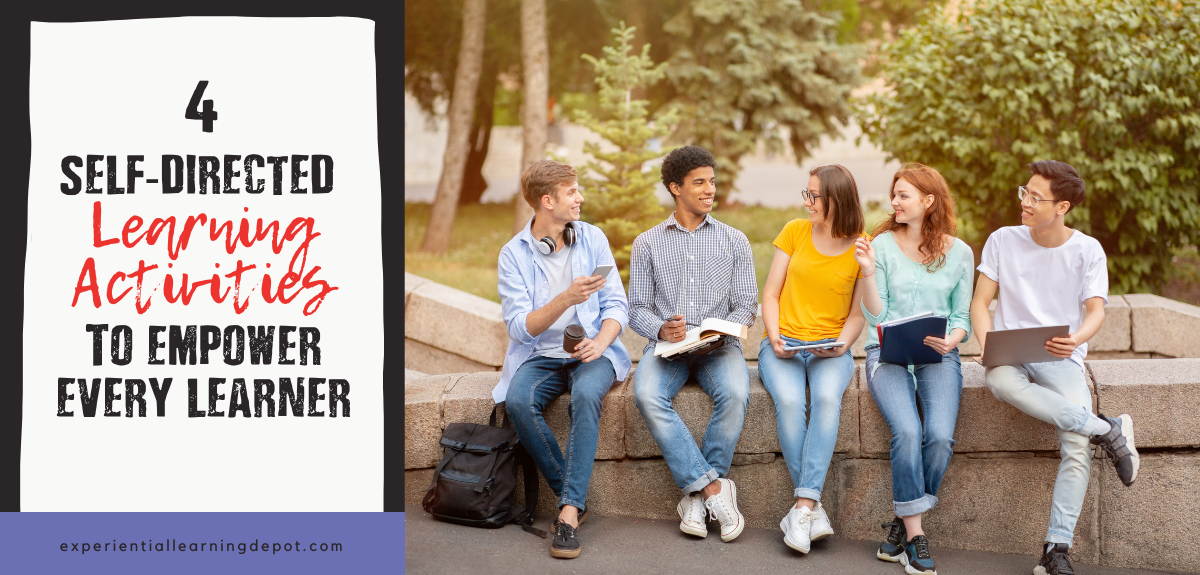
What are self-directed learning strategies that empower learners and promote agency? This is a popular question among educators that have an interest in self-directed learning and know the benefits, but aren’t sure about how to go about incorporating self-directed learning strategies in their classroom or homeschool.
|
Blog IntentTo provide innovative educational resources for educators, parents, and students, that go beyond lecture and worksheets. AuthorSara Segar, experiential life-science educator and advisor, curriculum writer, and mother of two. 
Categories
All
Archives
October 2026
|
 RSS Feed